Dikpala in Odisha Temple
Dikpala (Sanskrit: दिशा + पाल, “guardian of directions”) refers to deities assigned to protect the eight directions of the universe.
Each Dikpala governs a specific direction and maintains cosmic balance. In Odisha’s Kalinga architecture,
these deities are sculpted on the outer walls of temples, safeguarding the sanctum and symbolizing universal order.
Iconographic Descriptions
1. Indra (East)

Indra, king of the gods, holds a vajra and rides the elephant Airavata.
2. Agni (Southeast)
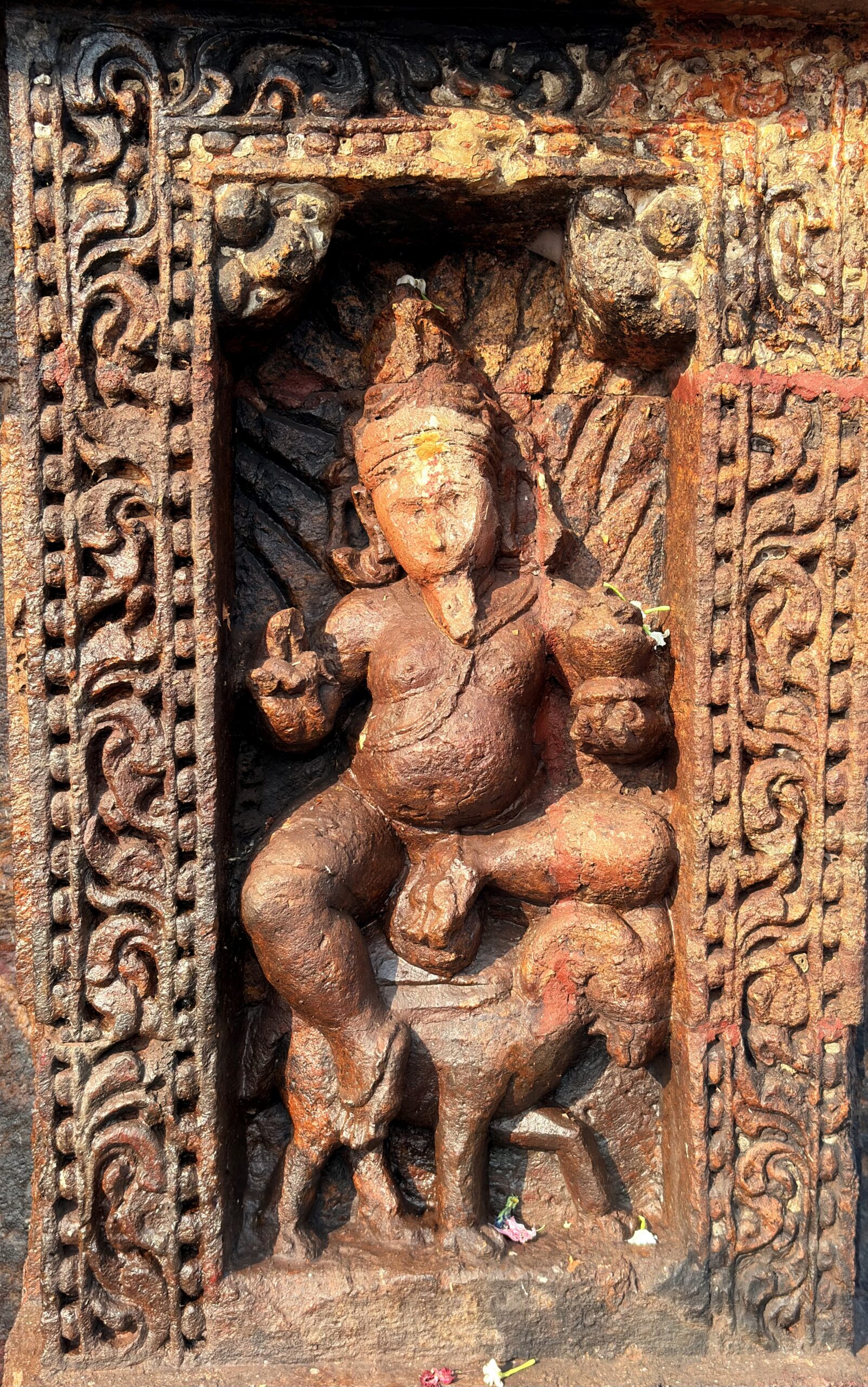
Agni, god of fire, rides a ram or flame-chariot.
3. Yama (South)
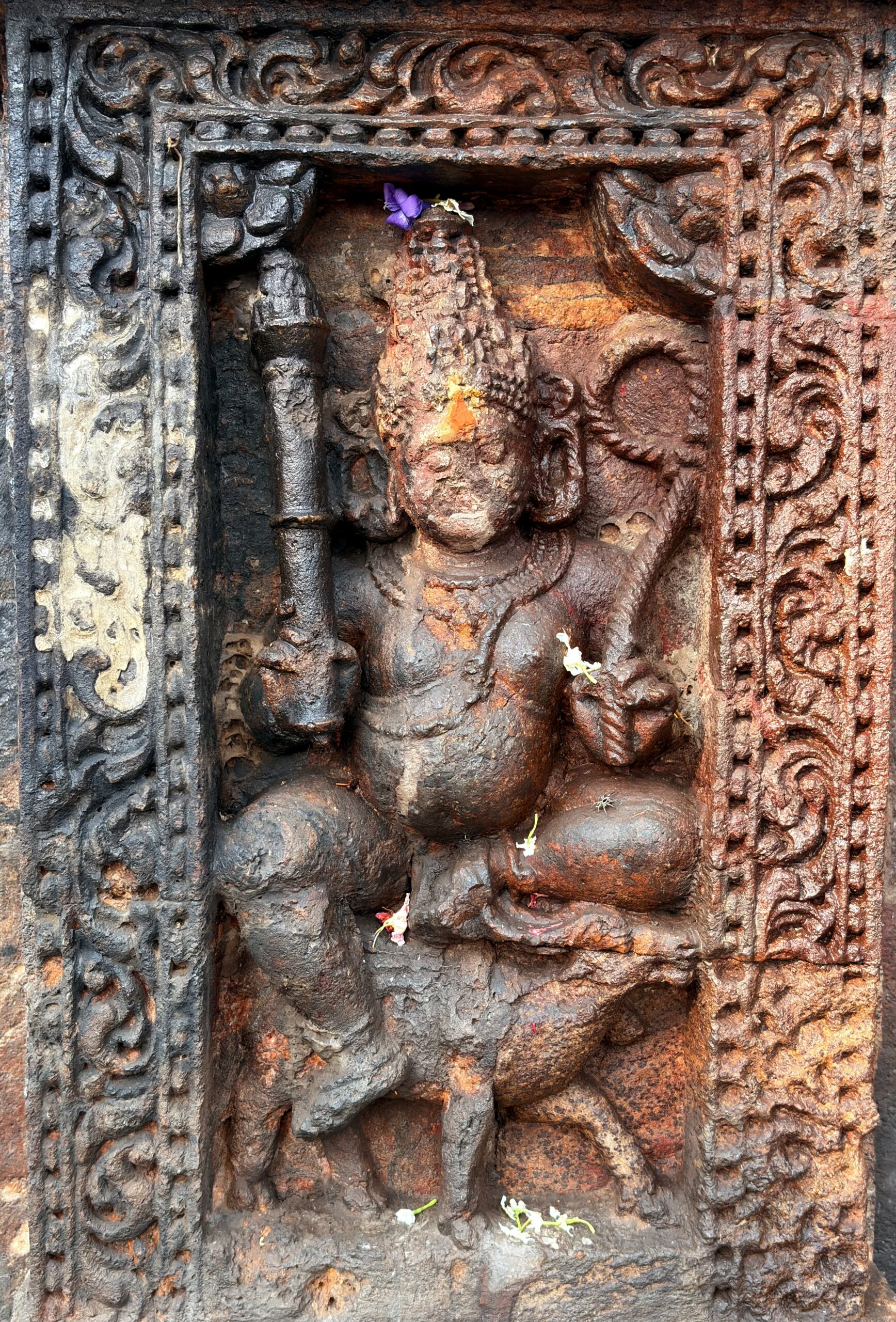
Yama, god of death and justice, rides a buffalo and carries a mace and noose, upholding justice and cosmic discipline.
4. Nirrti (Southwest)
Nirrti, goddess of decay and misfortune, represents destructive yet transformative forces.
5. Varuna (West)
Varuna, lord of the cosmic waters, rides a makara and holds a noose.
6. Vayu (Northwest)
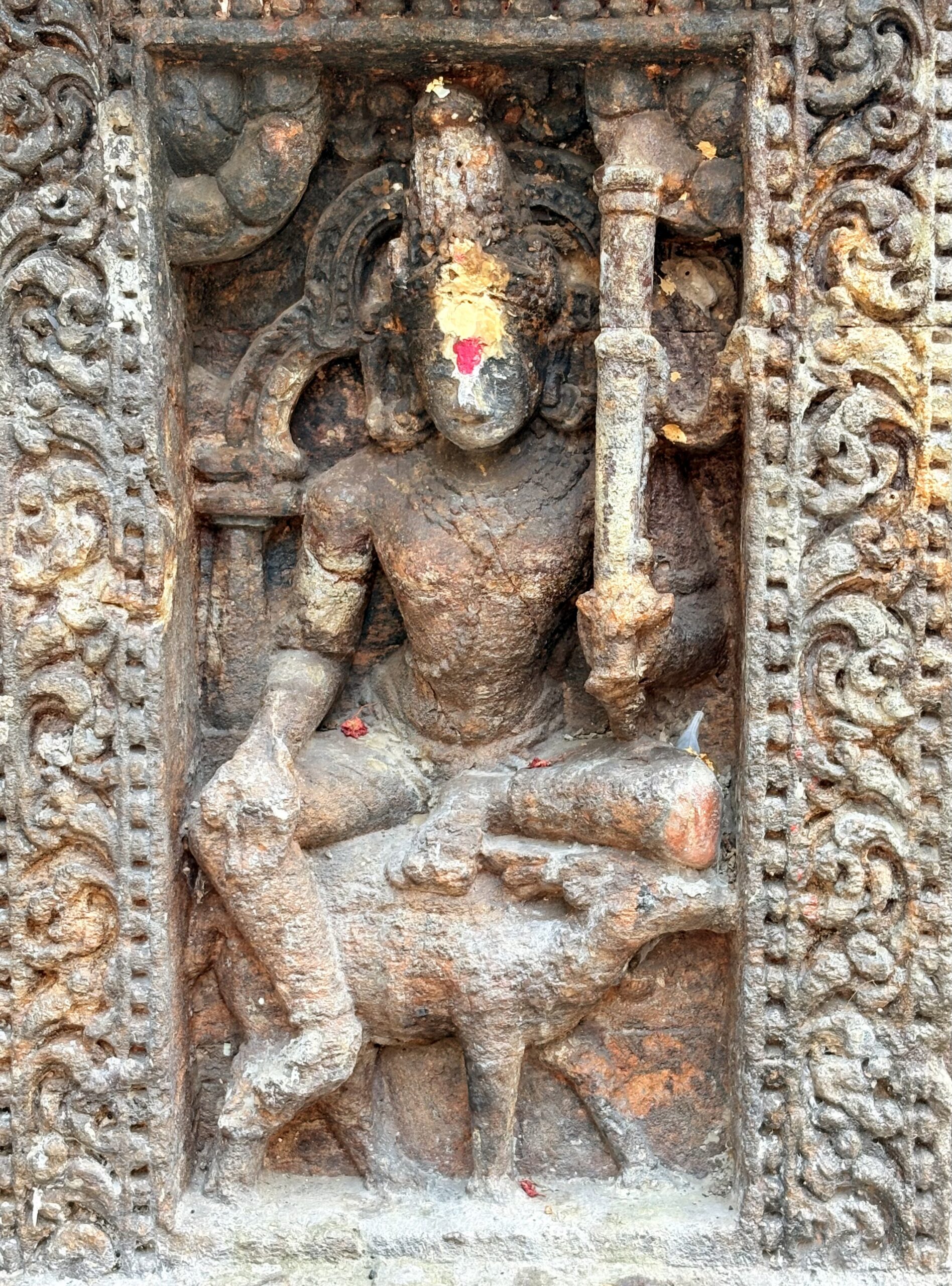
Vayu, the wind god, rides an antelope and carries a fluttering banner.
7. Kubera (North)
Kubera, god of wealth, appears stout-bodied with a money bag or mongoose.
8. Ishana (Northeast)
Ishana, a serene form of Shiva, symbolizes spiritual wisdom and cosmic regulation.
Directional Arrangement
The eight Dikpalas are positioned according to the Vastu Purusha Mandala, seen in major temples like
Lingaraja, Rajarani, and Brahmeswar, ensuring cosmic order and symmetry.